In today’s world, environmental challenges like soil degradation, water pollution, and climate change are becoming serious concerns. One of the biggest contributors to these problems is chemical-based agriculture .
Organic farming offers a powerful and sustainable solution — one that not only produces healthy food but also protects and restores the environment.
In this blog, we explore the key environmental benefits of organic farming and why it is essential for a greener future.
🌿 What is Organic Farming?
Organic farming is a natural method of agriculture that avoids synthetic chemicals and focuses on:
Natural fertilizers (compost, manure)
Crop rotation
Biological pest control
Eco-friendly practices
It works in harmony with nature rather than against it.
🌍 Top Environmental Benefits of Organic Farming
🌱 1. Improves Soil Health
Organic farming enhances soil fertility naturally by:
Increasing organic matter
Supporting beneficial microorganisms
Improving soil structure
Healthy soil leads to stronger crops and long-term sustainability .
💧 2. Protects Water Quality
Chemical farming often leads to:
Water contamination
Toxic runoff into rivers and groundwater
Organic farming prevents this by:
Eliminating harmful chemicals
Promoting natural filtration
Result: cleaner and safer water sources .
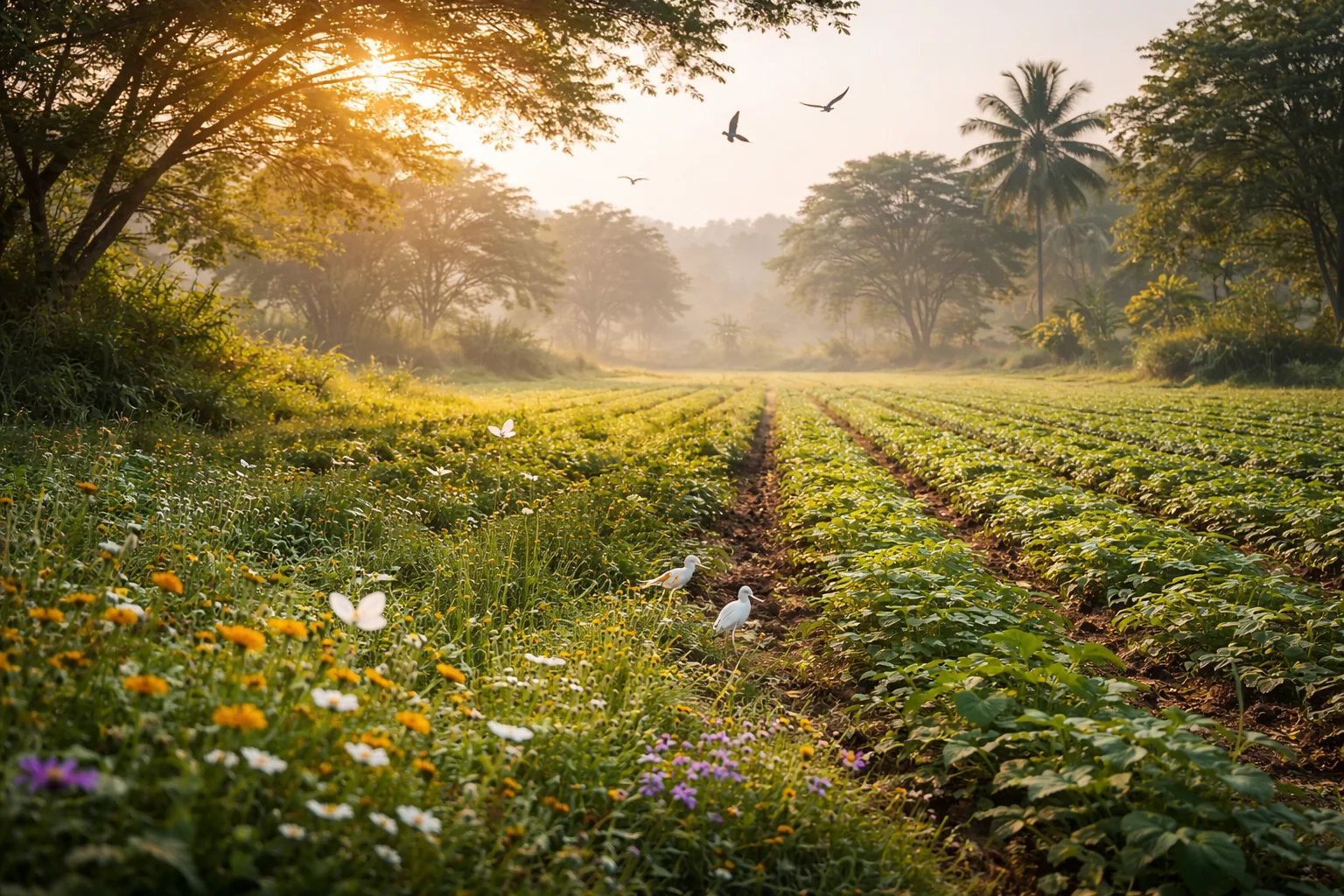
🌳 3. Promotes Biodiversity
Organic farms support:
Birds
Bees
Beneficial insects
Soil organisms
This creates a balanced ecosystem and helps maintain natural biodiversity.
🌬️ 4. Reduces Air Pollution
Chemical fertilizers release harmful gases into the atmosphere.
Organic farming reduces:
Greenhouse gas emissions
Air pollution
This contributes to a cleaner and healthier environment .
🌍 5. Combats Climate Change
Organic farming plays a key role in climate action by:
Storing carbon in the soil
Reducing dependency on synthetic inputs
Lowering carbon footprint
It supports a climate-resilient agricultural system .
🌿 6. Prevents Soil Erosion
Healthy organic soil:
Retains structure
Reduces erosion caused by wind and water
This helps preserve farmland for future generations.
🐝 7. Protects Pollinators
Bees and pollinators are essential for food production.
Organic farming:
Avoids harmful pesticides
Creates a safe environment for pollinators
This ensures better crop yields and ecosystem balance .
🌾 8. Encourages Sustainable Farming
Organic farming focuses on:
Long-term productivity
Resource conservation
Natural cycles
It ensures farming remains viable for generations.
💧 9. Improves Water Retention
Organic soil holds more water, which:
Reduces irrigation needs
Helps during drought conditions
This is crucial for water conservation in agriculture.
🌱 10. Reduces Chemical Dependency
By eliminating synthetic inputs, organic farming:
Reduces environmental toxicity
Promotes natural alternatives
This leads to a cleaner and safer ecosystem .
🌍 Organic Farming vs Environmental Damage
Aspect Organic Farming Chemical Farming Soil Health ✔ Improves ❌ Degrades Water Quality ✔ Clean ❌ Polluted Biodiversity ✔ Supports ❌ Harms Air Pollution ✔ Low ❌ High Sustainability ✔ Long-term ❌ Short-term
🌿 Why It Matters Today
With increasing environmental issues:
Climate change
Water scarcity
Soil degradation
Organic farming is not just an option — it is a necessity .
🌱 Conclusion
Organic farming goes beyond food — it protects the earth, water, air, and future generations .
By choosing organic, you are:
Supporting sustainable agriculture
Protecting natural resources
Contributing to a healthier planet
 Pure A2 Desi Cow Milk & Dairy