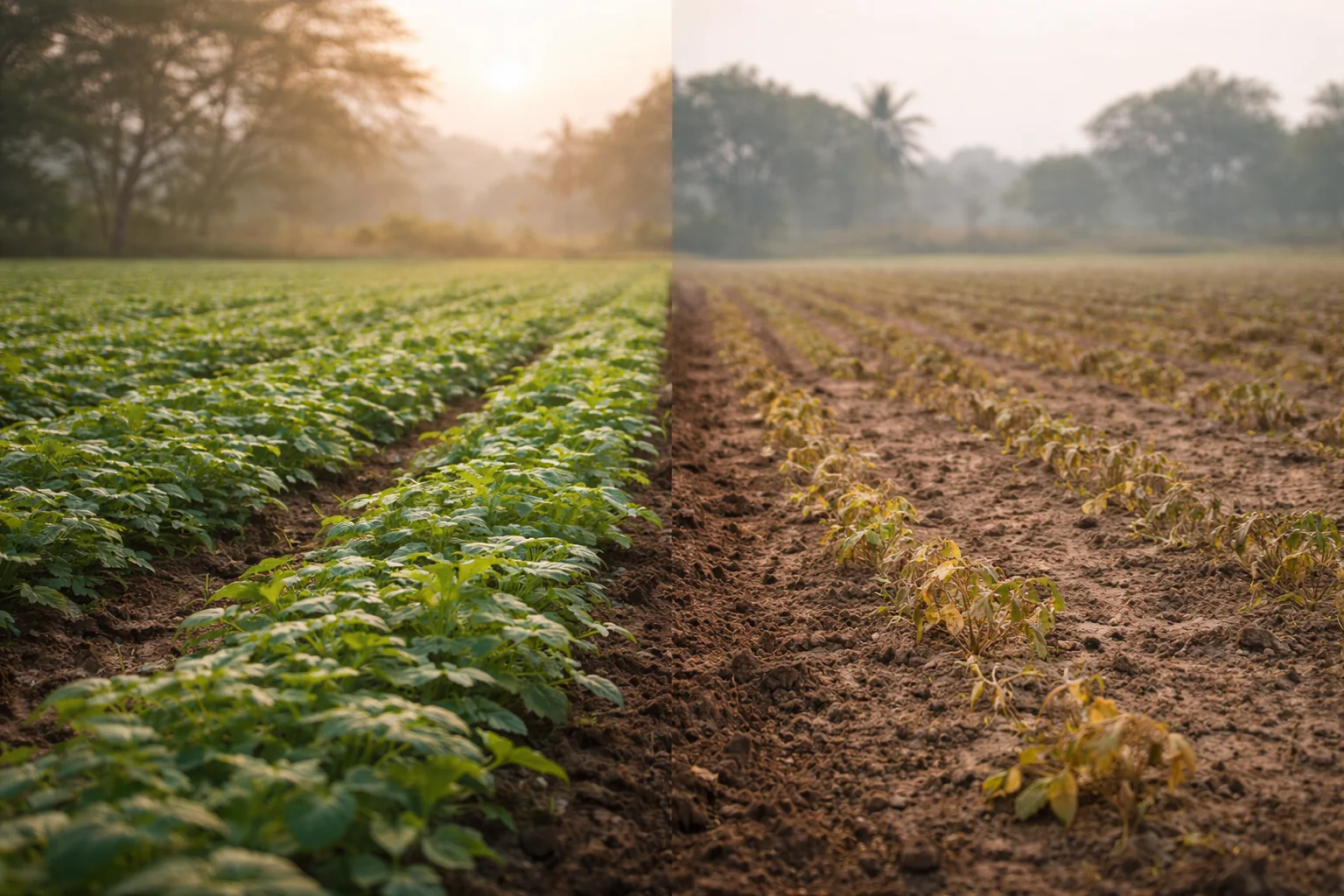
In today’s agriculture, there are two major farming approaches — organic farming and chemical (conventional) farming.
While chemical farming focuses on high yield using synthetic inputs, organic farming prioritizes natural methods, sustainability, and long-term health.
But which one is better? Let’s explore a complete comparison to understand the real difference.
🌾 What is Organic Farming?
Organic farming is a natural method of cultivation that avoids:
Chemical fertilizers
Synthetic pesticides
Artificial additives
Instead, it uses:
Compost and natural manure
Crop rotation
Biological pest control
⚗️ What is Chemical Farming?
Chemical farming (also called conventional farming) relies on:
Synthetic fertilizers
Chemical pesticides
Growth hormones
Its main goal is to increase production quickly and maximize yield.
⚖️ Organic vs Chemical Farming (Side-by-Side Comparison)
🌿 1. Food Quality
Organic Farming:
Chemical-free
Rich in nutrients
Natural taste
Chemical Farming:
May contain pesticide residues
Lower nutritional value over time
🧪 2. Use of Chemicals
Organic Farming:
No synthetic chemicals
Uses natural alternatives
Chemical Farming:
Heavy use of fertilizers and pesticides
Potential health risks
🥗 3. Health Impact
Organic Farming:
Safer for long-term consumption
Reduces toxin intake
Chemical Farming:
Linked to health issues with prolonged exposure
May affect hormones and immunity
🌍 4. Environmental Impact
Organic Farming:
Eco-friendly
Protects soil, water, and air
Chemical Farming:
Causes soil degradation
Pollutes water sources
🌱 5. Soil Health
Organic Farming:
Improves soil fertility naturally
Supports microorganisms
Chemical Farming:
Damages soil over time
Reduces fertility
💧 6. Water Usage
Organic Farming:
Better water retention
Less irrigation required
Chemical Farming:
Higher water usage
Soil loses water-holding capacity
🐄 7. Animal Welfare
Organic Farming:
Natural care of animals
No harmful injections
Chemical Farming:
Use of hormones and antibiotics
💰 8. Cost & Profitability
Organic Farming:
Lower input costs
Higher market value
Chemical Farming:
High input costs
Lower profit margins over time
🚜 9. Sustainability
Organic Farming:
Long-term sustainable
Supports future generations
Chemical Farming:
Short-term gains
Long-term damage
🍃 10. Taste & Freshness
Organic Farming:
Better taste
Fresh and natural
Chemical Farming:
Less flavor
Artificial growth
📊 Quick Summary Table
Factor
Organic Farming
Chemical Farming
Chemicals
❌ No
✔ Yes
Health Impact
✔ Safe
⚠ Risky
Soil Health
✔ Improves
❌ Degrades
Environment
✔ Eco-friendly
❌ Polluting
Taste
✔ Better
❌ Less natural
Sustainability
✔ Long-term
❌ Short-term
🌿 Which One Should You Choose?
If you are looking for:
Better health
Natural food
Sustainable living
👉 Organic farming is the clear choice
Chemical farming may offer quick results, but it comes with long-term risks — both for health and the environment.
🌾 Why More People Are Switching to Organic
Rising health awareness
Demand for clean food
Environmental concerns
Trust in natural products
Organic farming is not just a method — it’s a lifestyle shift.
🌿 Conclusion
The comparison is clear:
👉 Organic farming supports health, sustainability, and future generations 👉 Chemical farming focuses on short-term production at long-term cost
Choosing organic is not just better — it’s necessary.
 Pure A2 Desi Cow Milk & Dairy